
Frontal Fibrosing Alopecia (FFA)
Clinical Overview of A serious scarring condition requiring medical diagnosis before any surgical consideration.

What Is Frontal Fibrosing Alopecia?
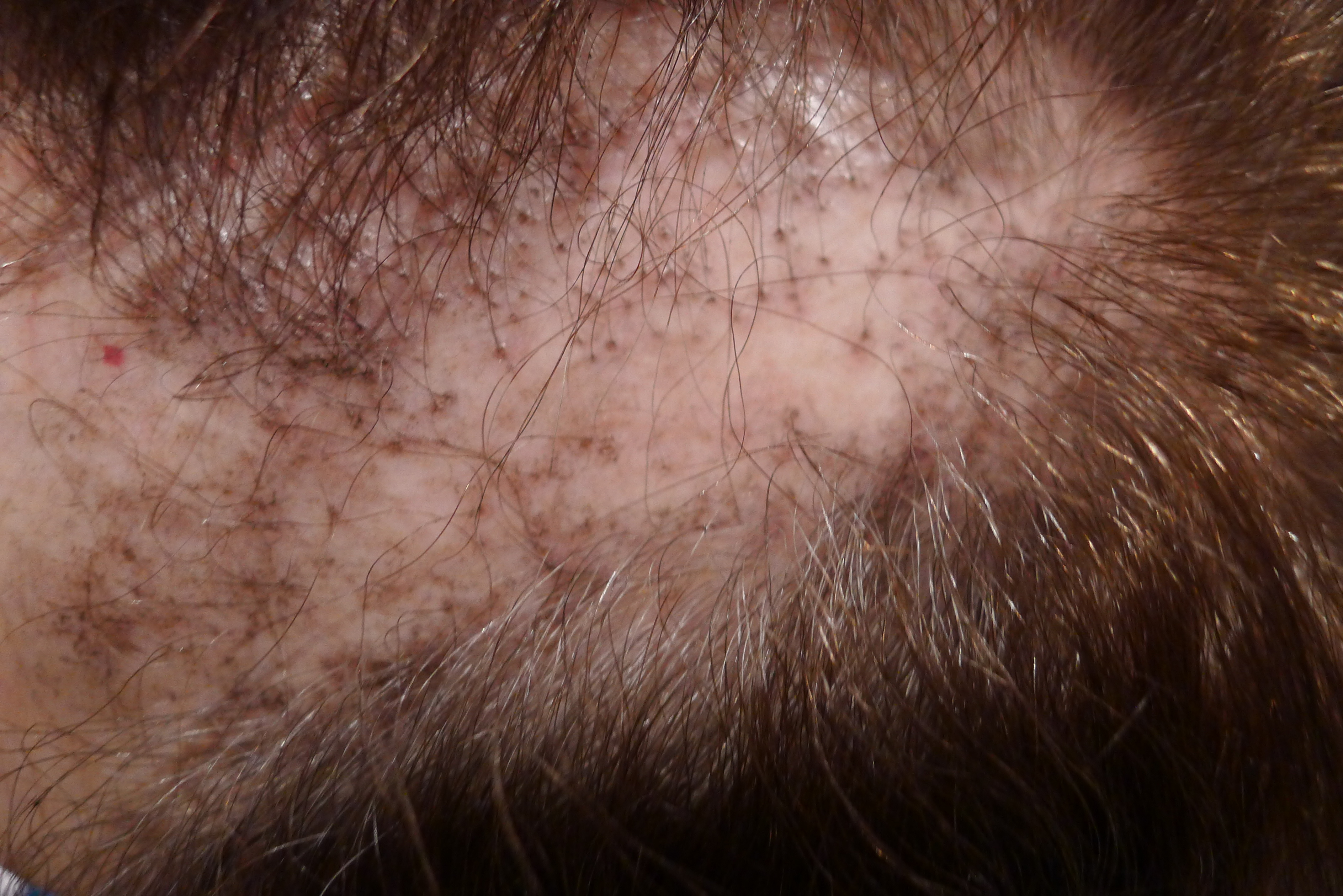
Frontal Fibrosing Alopecia (FFA) is a permanent, scarring (cicatricial) form of hair loss. It is an autoimmune condition where the body's immune system attacks and destroys hair follicles, primarily along the front hairline and temples.
Pathophysiology & Characteristics
- Irreversible Scarring: Destroyed follicles are replaced by smooth, shiny scar tissue. Once lost, hair cannot regrow naturally in these areas.
- Progressive Nature: The hairline typically recedes slowly but steadily over time if left untreated.
- Autoimmune Origin: Unlike Androgenetic Alopecia (genetic baldness), FFA is driven by inflammation and immune activity.
- Demographics: While most common in postmenopausal women, it can affect men and younger women as well.
Early diagnosis is critical to preserve remaining hair, as the damage is permanent.
What Are the Key Signs of FFA?
FFA presents differently than standard thinning. Recognizing these specific signs is vital for timely medical intervention.
Clinical Indicators
- Band-Like Recession: A symmetrical, straight-line recession of the frontal hairline, often extending to the temples.
- Eyebrow Loss: Partial or complete loss of eyebrows is a hallmark sign, occurring in a majority of patients.
- Smooth Skin: The affected area appears pale, shiny, and smooth, with no visible follicular openings (pores).
- "Lonely Hair" Sign: Isolated, single hairs remaining within the bald, scarred band.
- Body Hair Loss: Thinning or loss of eyelashes, arm, and leg hair may also occur.
- Lack of Symptoms: The condition is often asymptomatic (no itching or pain), which frequently leads to delayed diagnosis until significant recession has occurred.
The combination of hairline recession and eyebrow loss should immediately trigger a suspicion of FFA.
Why Is a Scalp Biopsy Non-Negotiable?
FFA is frequently misdiagnosed as a high forehead or female pattern hair loss. Proceeding without a confirmed histological diagnosis risks irreversible damage and inappropriate treatment.
The Diagnostic Standard
- Histological Confirmation: A scalp biopsy is essential before any treatment plan is initiated. It must be taken from the active edge of the hairline to confirm the presence of scarring and perifollicular inflammation.
- Risk of Misdiagnosis: Treating FFA as genetic hair loss (e.g., with minoxidil alone) fails to address the underlying inflammation, allowing the disease to progress unchecked.
- Surgical Danger: Undergoing a hair transplant for undiagnosed, active FFA is a critical error. It can trigger the Koebner phenomenon, where surgical trauma induces new inflammatory lesions, destroying both existing native hair and the newly transplanted grafts.
A biopsy is the only definitive method to distinguish scarring alopecia from non-scarring types.
Is Hair Transplantation Safe for FFA?
In nearly all cases, no. Hair transplantation is strongly contraindicated during active disease phases. The fundamental principle of hair restoration is to preserve the lifetime donor supply; wasting grafts on an active autoimmune condition violates this principle.
Absolute Contraindications for Surgery
- Active Recession: Any evidence that the hairline is currently moving backward.
- Inflammation: Presence of redness, scaling, or perifollicular erythema at the hairline border.
- Positive Biopsy: Histological evidence of active immune activity or lichenoid inflammation.
- Recent Progression: Documented hair loss within the last 24 months.
Transplanting into active FFA risks total graft failure and acceleration of the disease process.
When Might Surgery Be Considered?
Transplantation is viewed as a high-risk last resort, considered only in exceptionally rare circumstances where strict criteria for disease quiescence are met.
Strict Criteria for Consideration
- Proven Stability: The disease must be completely inactive for a minimum of 2–3 years, verified by serial clinical photography and regular specialist examinations.
- Clean Biopsy: A recent biopsy from the intended recipient area must show no active inflammation or scarring activity.
- Ongoing Medical Therapy: The patient must be committed to long-term maintenance medication (e.g., antimalarials, finasteride) to suppress potential reactivation.
- Realistic Expectations: Full understanding that graft survival rates may be lower than in non-scarring cases, and that reactivation of the disease remains a lifelong risk.
Even when these conditions are met, many experts advise against surgery entirely due to the unpredictable nature of autoimmune scarring alopecias.
What Is the Primary Treatment for FFA?
Since destroyed follicles cannot be regenerated, the primary clinical goal is to halt the immune attack and preserve existing hair. Early intervention is key to preventing further recession.
First-Line Medical Therapies
- Anti-Inflammatory Agents: Topical corticosteroids and intralesional steroid injections are commonly used to reduce local inflammation.
- Systemic Medications: Oral medications such as Hydroxychloroquine (an antimalarial with immunomodulatory effects) are often prescribed for widespread or progressive cases.
- 5-Alpha Reductase Inhibitors: Finasteride or Dutasteride may be utilized to block hormonal pathways that can exacerbate the condition.
- Symptom Management: Treatments to alleviate any associated itching, burning, or discomfort.
Long-Term Monitoring
Regular follow-up every 6–12 months with standardized photography is crucial to detect any subtle signs of reactivation early. Lifelong management is typically required.
Critical Medical Principles
- Permanent Scarring: FFA destroys follicles irreversibly, replacing them with smooth scar tissue. Natural regrowth is impossible.
- Biopsy Is Mandatory: Diagnosis must be confirmed via scalp biopsy before any treatment plan is formulated. Misdiagnosis as genetic hair loss is common and dangerous.
- Surgical Contraindication: Hair transplantation during active disease is prohibited. It risks triggering the Koebner phenomenon, accelerating hair loss and causing graft failure.
- Strict Stability Criteria: Surgery is only remotely considered after 2–3 years of documented inactivity, verified by serial photography and repeat biopsy.
- Medical Priority: The primary goal is halting disease progression via anti-inflammatory medications (e.g., hydroxychloroquine, steroids), not restoring lost hair.